


If you’re trying to figure out how to get wholesale prices, you’re not just looking for a cheaper source — you’re learning where to look, how to prove you’re a legitimate buyer, and how to negotiate terms that actually protect your margins.
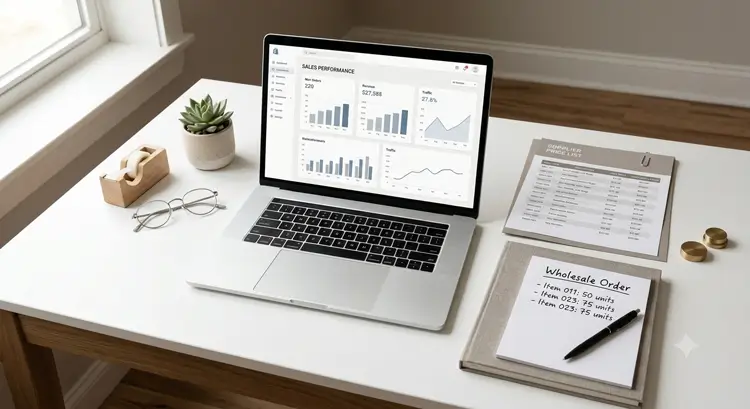
Quick Answer: To get wholesale prices, register your business, obtain a reseller or tax certificate if required in your region, then reach out to suppliers on platforms like Faire or Alibaba with a professional outreach email. State your order volume, target price, and offer a reason to build a long-term relationship.
Table of Contents
Who Actually Qualifies for Wholesale Prices
Wholesale pricing isn’t automatically available to everyone. Suppliers use a few signals to decide whether to extend it to you.
You typically qualify if you can show:
- A registered business (sole proprietorship, LLC, or limited company)
- A reseller certificate or seller’s permit, required in the US and many other markets to prove you’re buying for resale, not personal use
- An ability to meet minimum order quantities (MOQs), which can range from 10 units to 1,000+ depending on the supplier and product
- A credible online presence- your store URL, social page, or a quick description of your audience goes a long way
If you’re running a WooCommerce or Shopify store, having even a basic business registration and a working storefront is usually enough to get started with most mid-tier wholesalers.
Not sure if you need a license? Read: How to Buy Wholesale Without a Business — it covers what you can and can’t access without a formal setup.
How to Get Wholesale Prices: Platforms and Sources
Here are the main channels where you can actually access and compare wholesale pricing.
Online Wholesale Marketplaces
These platforms let you browse supplier catalogs, compare MOQs, and message sellers directly — all in one place.
| Platform | Best For | Access & Notes |
|---|---|---|
| Faire | Independent brands, US & EU retailers | Retailers apply with business details; many brands offer net-60 terms and low MOQs |
| Alibaba | Global manufacturers, bulk buyers | Wide price range; you negotiate directly; always verify supplier credentials |
| Global Sources | Electronics, factories, large volume | Strong for Asia-Pacific sourcing; verified supplier badges available |
| DHgate | Small batches, mixed SKUs | Good for test orders; read reviews carefully before committing |
| Wholesale Central | US-based wholesalers | Directory model; click through to each supplier and request price lists directly |
Note: Tundra ceased operations as a wholesale marketplace in July 2023, so skip it from your sourcing list.
“For an extended list beyond these platforms, The Best Wholesale Websites covers more sourcing options worth bookmarking.”
Directly From Manufacturers
Going direct cuts out the distributor margin and often gets you the best prices — but it requires more legwork. Most manufacturers have a “wholesale” or “trade” section on their website, or you can find them at trade shows and B2B events.
Direct outreach works especially well when you can demonstrate volume or a growing audience. Even a simple “we sell X units per month and are looking to scale” is more persuasive than you might think.
For a detailed breakdown of this route, see: How to Buy Wholesale Directly from Manufacturers
How to Negotiate Wholesale Prices (The Most Important Part)
The platform gets you in the door. Your negotiation gets you the deal. Most new buyers either don’t negotiate at all, or they approach it the wrong way, asking for a discount without offering any reason for the supplier to agree.
Good negotiation is simple: Offer value in exchange for better terms.
Before You Send Any Message
Know these numbers before you reach out:
- The competitor price you’re benchmarking against (optional but useful)
- Your realistic opening order quantity
- Your reorder frequency if the first order goes well
- Your target unit cost (what you need to hit your margin)
Recommended Blog for You:
👉 What is a Wholesale Supplier: A Comprehensive Overview
👉 The Best Wholesale Websites You Need to Know About
👉 Best WooCommerce B2B Plugins – Boost Your Own Business
👉 How to Buy Wholesale Directly from Manufacturers
👉 Exploring the Top B2B King Alternatives
The Negotiation Email Template (Copy-Paste Ready)
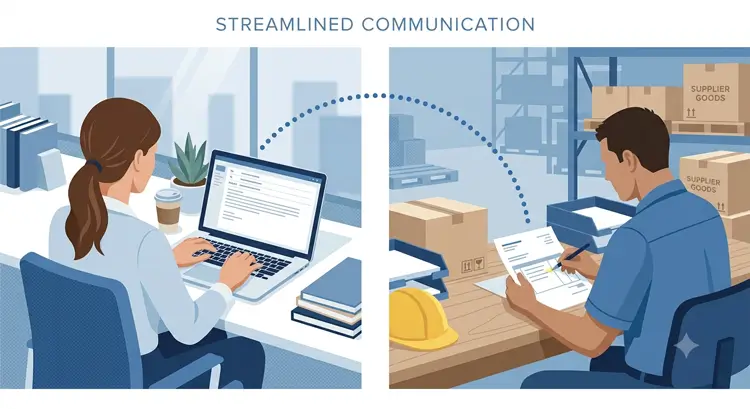
Use this as your starting point. Adjust the specifics for your product and store.
Subject: Wholesale Pricing Inquiry — [Your Store Name] / [Product Category]

Dear [Supplier/Brand Name],

My name is [Your Name], and I manage [Store Name] — a [brief niche, e.g., "sustainable home goods"] store operating on [WooCommerce/Shopify], primarily serving customers in [your primary market].

We're currently expanding our product catalog and are interested in carrying your [specific product line or SKU range]. I'd love to explore a wholesale partnership.

Could you please share:

- Your wholesale price list and available currency options

- Minimum order quantities (MOQ) per SKU or per order

- Any volume discounts available at higher quantities

- Standard lead times and shipping options to [your city/country]

For an initial test order of approximately [X units], we're targeting a landed unit cost in the range of [your target price] to maintain sustainable margins while giving your products solid placement and promotion on our store.

In return, we're prepared to:

Feature your products prominently in our product pages and collection highlights

Include your brand in our [email newsletter / social media promotions]

Commit to a [monthly/quarterly] reorder schedule if our first order performs well

If these terms are workable, I'd be glad to review your full catalog and move quickly on an initial order.

Thank you for your time — I look forward to hearing from you.

Best regards,
[Your Full Name]
[Store Name] | [Website URL]
[Business registration / tax ID if relevant to your region]
What to Say, and What to Avoid
Say this:
- “We’re planning to reorder every 4–6 weeks if sell-through is strong.”
- “Our target price range is [X–Y], can you work within that for an initial order?”
- “Are there tiered price breaks at 100, 250, or 500 units?”
- “We’d love to promote your brand to our audience of [X subscribers/followers].”
Avoid this:
- “Your prices are too high”, no context, no offer, no reason to budge
- Vague requests like “Can you give me a better deal?” without a number
- Misrepresenting your volume or audience size damages trust immediately
- Demanding a price match with competitors without explaining your sourcing relationship.
Negotiate Beyond Price:
Unit price isn’t the only lever. These adjustments can be just as valuable for your cash flow:
- Lower MOQ for the first order, scaling up once you’ve tested the product
- Net payment terms (e.g., pay in 30 or 60 days instead of upfront)
- Free or discounted shipping on larger orders
- Sample policy — getting samples at cost or free before committing
A Real-World WooCommerce Wholesale Workflow
Here’s how this plays out in practice for a WooCommerce store owner sourcing a new product line.
Scenario: You run a WooCommerce store selling minimalist home décor. You want to add a line of handmade ceramic mugs.
- Identify the gap: Your Google Analytics shows strong organic traffic to “ceramic mug” category pages but low conversion because your current SKUs are generic.
- Shortlist suppliers: You find three artisan brands on Faire and two manufacturers on Alibaba. You filter for MOQs under 50 units to keep risk low.
- Send outreach emails: You use the template above, mention your audience size and existing traffic, and request pricing and sample options.
- Compare responses: Two suppliers respond within 48 hours. You compare their price lists, lead times, and sample policies side by side.
- Import and manage pricing in WooCommerce: After agreeing on terms, you import the products and use a plugin like WPWhols to set tiered wholesale prices, restrict wholesale access to approved B2B customers, and create quick-order forms for bulk buyers.
- Renegotiate at scale: After 90 days of consistent reorders, you go back and negotiate an additional 8–12% reduction based on demonstrated volume.
This loop source, test, scale, renegotiate is how most successful wholesale buyers build long-term cost advantages.
How to Calculate Wholesale Prices — once you’ve agreed on a price, this guide helps you work out your margins and final retail pricing.
Red Flags: Suppliers to Avoid
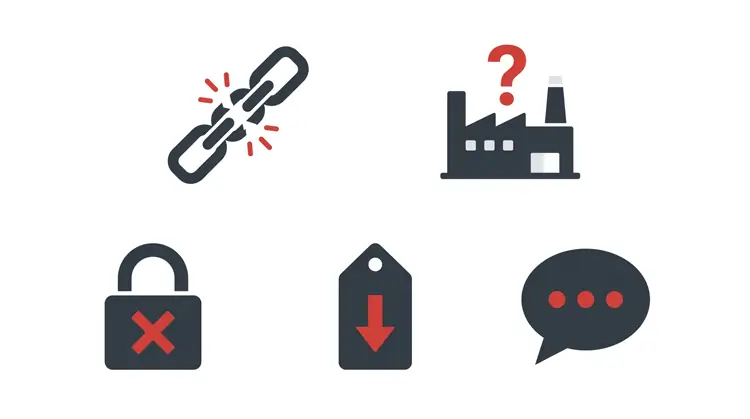
Not every low price is worth chasing. Watch for these warning signs before committing to any supplier.
- No verifiable business identity: Missing company name, address, or registration details on their website or platform profile
- Refuses to share basic documents or won’t provide invoices, tax IDs, or official banking details
- Pushes you off-platform: Insists on communicating via WhatsApp or personal email only, and asks for payment outside the marketplace
- Prices are suspiciously low with no explanation, far below market rate, with generic product photos and no factory or brand information
- Evasive about lead times and returns; gives vague answers when you ask about quality control, shipping timelines, or what happens if products are defective
If something feels off, it usually is. Start with a small test order, validate quality before scaling, and never pay an unverified supplier in full upfront.
Frequently Asked Questions
Do I need a business license to get wholesale prices?
In many regions, wholesalers expect you to have a registered business and, where applicable, a reseller or sales tax certificate before offering true wholesale pricing. Platforms like Faire explicitly request business details during onboarding. That said, requirements vary by country and supplier. Some are flexible for smaller online stores, especially if you can demonstrate a credible storefront.
How do I ask for wholesale pricing?
Introduce yourself, explain your store and target audience, then clearly request a price list, MOQs, and available terms in a short, professional email. Mention your expected order size and your target unit price. Frame it as a long-term partnership rather than a one-off discount ask; suppliers are much more responsive when they see ongoing potential.
Can I get wholesale prices without a formal business setup?
In some cases, yes. Certain platforms and suppliers will work with small online sellers or resellers who can demonstrate intent to resell and meet basic MOQs. However, a formal registration and proper tax documentation gives you broader access, better pricing, and more trust with serious suppliers.
If you’re not sure where you stand, read How to Buy Wholesale Without a Business.
Is negotiation always about lowering the unit price?
Not at all. Some of the best outcomes in supplier negotiations come from adjusting MOQs, payment terms, or shipping costs rather than the per-unit price. These changes can have just as big an impact on your margin and cash flow, sometimes bigger.
How long does it take to hear back after a supplier outreach email?
Most responsive suppliers reply within 24–72 business hours. If you don’t hear back after 5 business days, a single polite follow-up is appropriate. If there’s still no response, move on; a supplier that doesn’t communicate during the inquiry stage won’t be reliable once you’re ordering.
Managing wholesale pricing and customer tiers in your WooCommerce store? WPWhols makes it easy to set role-based wholesale prices, hide pricing from guests, and create quick-order forms, all without code.