


Quick Answer: Wholesale marketing is the practice of promoting your products to retailers and business buyers rather than end consumers. Effective strategies combine digital tactics (content, email, SEO, social media) with relationship-driven approaches (trade shows, loyalty programs, CRM) to attract qualified buyers, increase repeat orders, and grow average order value.
Are you ready to take your wholesale marketing efforts to the next level? If so, look no further! In this guide, we cover 10 proven wholesale marketing strategies from content creation to CRM and loyalty programs that help B2B and wholesale businesses attract retailers, retain partners, and drive consistent revenue growth.
From creating memorable content to harnessing the power of social media, these wholesale marketing strategies are essential for any company looking to succeed in today’s digital landscape.
Table of Contents
Understanding Wholesale Marketing
Wholesale marketing is the strategy of selling products in bulk to retailers and other businesses rather than individual consumers. Retailers who specialize in resale benefit from reduced prices, better profit margins, and easier product selection, thanks to a well-executed wholesale marketing approach.
Understanding the wholesale business model, including how the supply chain is structured and the role wholesalers play, is the foundation of any effective marketing strategy.
Unlike B2C marketing, wholesale marketing targets professional buyers with longer decision cycles, larger order values, and a greater emphasis on trust, reliability, and terms.
Businesses that understand this distinction can build a more effective marketing plan, one that speaks directly to what retail buyers need: consistent supply, competitive pricing, and a frictionless ordering experience.
Effective Strategies for Wholesale Marketing
Wholesale businesses can be incredibly profitable, but only if the right marketing strategies are in place. Effective wholesale marketing takes on many different forms, and it will all depend on your specific industry and target market.
Leverage Content Marketing

Running a successful wholesale business isn’t just about offering great products and competitive pricing. In today’s digital age, businesses need a strong online presence to attract retailers and wholesale buyers. Content marketing is one of the most scalable ways to build that presence.
You can establish trustworthiness and position yourself as an industry leader by producing useful, targeted content – blog articles, videos, webinars, product guides, or infographics that speak directly to your buyers’ challenges.
Focus on content that answers the real questions retailers ask before placing a wholesale order: pricing structure, minimum order quantities, shipping timelines, and product quality assurance.
Content marketing also supports your SEO strategy (see below) by driving organic traffic from retailers actively searching for suppliers. A well-maintained blog that covers your niche, whether it’s wholesale apparel, electronics, or consumables, builds authority and generates inbound leads over time, reducing reliance on outbound sales.
Harness Social Media
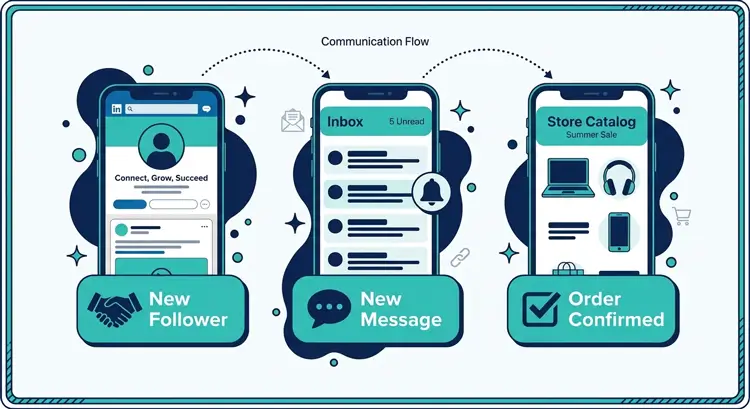
To elevate your wholesale marketing plan, it’s crucial to harness the power of social media. LinkedIn is the most valuable platform for B2B wholesale marketing; it allows you to connect with retail buyers, purchasing managers, and distributors by name and company. Facebook and Instagram work well for product-led categories where visual appeal drives interest.
Utilizing these channels effectively means more than just posting product photos. Share behind-the-scenes content, supplier stories, new product arrivals, and customer success stories. Use LinkedIn to share thought leadership content that positions your brand as a knowledgeable, reliable partner.
Run targeted paid campaigns to reach specific retail niches. For example, boutique owners, specialty food shops, or hardware retailers, using platform audience tools.
With a consistent social media presence, you create meaningful touchpoints with potential stockists long before they’re ready to place a first order.
Utilize Email Marketing
Email marketing is one of the highest-ROI wholesale marketing channels available. For wholesale businesses, it works across the full buyer lifecycle: attracting new retailer prospects, onboarding first-time buyers, and driving repeat orders from existing accounts.
For outbound prospecting, segment retailers by niche and personalize your outreach with a clear value proposition, your top wholesale SKUs, and a first-order incentive. For existing partners, use automated sequences to send reorder reminders, announce new products, and share seasonal promotions.
Keep your partners engaged and informed by providing updates relevant to their business, sell-through tips, merchandising ideas, and industry news; all add value beyond transactional messages.
For a deeper playbook on B2B email tactics, see the guide to B2B wholesale email marketing strategies.
Attend Industry Trade Shows
Attending industry trade shows is one of the most effective ways to get your products in front of qualified retail buyers. These events are ideal for networking with industry insiders, establishing new wholesale partnerships, and putting your brand in front of the right decision-makers at scale.
Choose trade shows that align with your product category and target retail segment. Before attending, prepare professional line sheets, order forms, and product samples.
Follow up promptly after the event and send personalized emails within 48 hours to every lead you collected, referencing your specific conversation to keep momentum alive.
Trade shows also provide valuable market intelligence: you can study competitor positioning, spot emerging product trends, and understand what retailers are actively looking for in a wholesale partner.
Use a CRM System
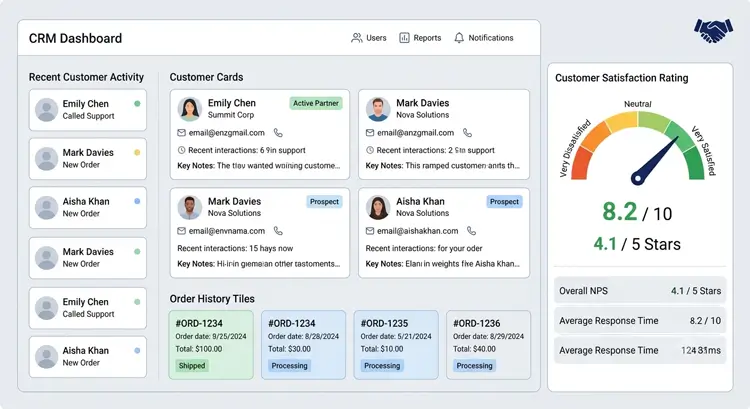
A customer relationship management (CRM) system is one of the best infrastructure investments for wholesale marketing. It lets you track every retailer interaction orders, inquiries, feedback, preferences in one place, so no relationship slips through the cracks.
Wholesale buyers want to feel appreciated and acknowledged. With a CRM, you can segment accounts by size, order frequency, or product category, and tailor your outreach accordingly.
Use it to trigger automated reorder reminders, flag at-risk accounts that haven’t ordered in 60+ days, and identify your highest-value buyers for priority service. Having this data also helps you make better decisions about pricing, promotions, and product bundling, all grounded in real buyer behavior rather than guesswork.
Implement SEO Best Practices
For wholesale businesses that rely on inbound retail buyers, SEO is a long-term marketing asset that compounds over time. Most retail buyers begin their supplier search on Google; ranking well for wholesale-specific queries gives you a consistent stream of qualified leads without ongoing ad spend.
Focus on keyword phrases that reflect how buyers search: “bulk [product] wholesale USA,” “low MOQ wholesale supplier,” or “[product] wholesale for small businesses.” Optimize your product pages, category pages, and blog content around these terms.
Build high-quality backlinks from industry directories, trade publications, and partner sites. Ensure your site loads fast, is mobile-friendly, and uses clear structured data (schema markup) so Google can understand and surface your content in rich results.
Offer Competitive Pricing
Competitive pricing is a cornerstone of effective wholesale marketing. Retailers are making buying decisions based on their own margin calculations — if your wholesale price doesn’t leave them room for a healthy markup, they’ll go elsewhere.
Implement a clear wholesale pricing strategy that balances your margin requirements with what the market will bear. Use tiered pricing to reward larger orders and encourage account growth.
Monitor competitor pricing regularly and ensure your value proposition quality, reliability, lead times, support is clearly communicated so buyers understand why your pricing is justified. Transparent, easy-to-understand pricing also reduces friction in the ordering process, which directly improves conversion.
To understand the mechanics of setting the right price, see what is wholesale pricing and how to calculate wholesale prices.
Provide Excellent Customer Service
Customer satisfaction is the most effective retention strategy in wholesale marketing. A buyer who has a seamless experience with accurate orders, on-time delivery, responsive support, and proactive communication will reorder, spend more, and refer other retailers.
Providing excellent customer service means listening to and resolving concerns quickly, offering personalized solutions for high-value accounts, and setting clear expectations on lead times and fulfillment.
Build in proactive check-ins with your key accounts: ask how products are selling, flag relevant new arrivals, and offer help with merchandising or inventory planning. This level of support transforms a transactional buyer relationship into a genuine wholesale partnership, which is far harder for competitors to displace.
Optimize Your Website
Your website is your most important wholesale marketing asset, it operates 24/7, sets first impressions, and either converts or loses retail buyers before they ever speak to you.
A wholesale-optimized website should include password-protected buyer access, tiered pricing visibility, downloadable catalogs or line sheets, clear MOQ and shipping terms, and an easy reorder flow.
Equip your site with clean design, clear navigation, and compelling content about your brand and products. Include retailer testimonials, certifications, and any social proof that builds trust.
If you run WooCommerce, a plugin like Whols lets you build a dedicated wholesale portal with role-based pricing, buyer registration, and order management all within your existing store.
For more on improving your marketing strategy for wholesale distributors, see our dedicated guide.
Develop a Loyalty Program
A loyalty program is one of the highest-leverage wholesale marketing strategies for increasing lifetime customer value. Wholesale buyers who have consistently supported your business deserve exclusive offers and incentives that encourage them to continue and grow their relationship with you.
Effective wholesale loyalty programs can take many forms: tiered discounts based on annual spend, early access to new product launches, free shipping above certain order thresholds, or personalized rebates for top accounts.
The key is making rewards feel meaningful and attainable. Tie your loyalty program to your CRM so you can track eligibility automatically and communicate tier benefits clearly through email and your buyer portal.
A well-designed loyalty program reduces churn, increases average order value, and generates word-of-mouth referrals, all at a lower cost than acquiring new wholesale accounts. Pair it with principles of wholesale pricing psychology to frame each tier as an attractive next step rather than a distant goal.
Frequently Asked Questions
What is wholesale marketing?
Wholesale marketing is the practice of promoting products and services to business buyers, primarily retailers, distributors, and resellers, rather than end consumers. It focuses on building B2B relationships, communicating value at scale, and driving bulk orders through channels like email, trade shows, SEO, and content marketing.
How can I generate leads for my wholesale business?
You can generate leads for your wholesale business by implementing strategies such as attending trade shows, networking with industry professionals, offering incentives for referrals, running targeted advertising campaigns, and utilizing lead capture forms on your website. SEO and content marketing are particularly effective for attracting inbound leads, retailers who are actively searching for suppliers in your product category.
How can I ensure smooth and convenient ordering and fulfillment for wholesale customers?
You can ensure smooth ordering and fulfillment for wholesale customers by implementing an efficient order management system, providing clear product information and availability, offering flexible payment options, and establishing reliable and timely shipping processes.
In WooCommerce, a plugin like Whols automates wholesale ordering rules, including minimum quantities, tiered pricing, and buyer access, so the experience is consistent and frictionless for every retail partner.
How can I measure the success of my wholesale marketing efforts?
You can measure the success of your wholesale marketing efforts by tracking key performance indicators (KPIs) such as sales volume, customer retention rate, return on investment (ROI), customer satisfaction, and the number of new wholesale partnerships gained. Additional useful metrics include average order value (AOV), repeat purchase rate, and cost per acquired wholesale account.
What is the difference between wholesale marketing and retail marketing?
Wholesale marketing targets businesses (retailers, distributors) rather than individual consumers. The sales cycles are longer, order values are larger, and buyers are more sophisticated; they evaluate pricing, reliability, MOQ terms, and logistics before committing.
Wholesale marketing relies heavily on relationship-building, email outreach, trade shows, and B2B-optimized websites, whereas retail marketing is more focused on brand awareness, emotion, and impulse conversion.
Final Thoughts
Taking advantage of digital transformation and trends to market your wholesale business can be complex, but businesses that build a systematic approach consistently outperform those relying on ad hoc tactics.
The 10 strategies outlined here aren’t a one-size-fits-all solution. Experiment, measure results, and double down on what drives the most qualified buyer relationships for your specific niche.
To take the next step, explore how to grow your wholesale business with a broader strategic framework or dive into how to start a wholesale business if you are still building your foundation.
With dedication and consistent effort, these proven wholesale marketing strategies will help you attract more retail partners, increase order values, and build a more resilient B2B business.