


Stop me if you’ve heard this story before: An entrepreneur launches a dropshipping store selling the exact same generic galaxy projector or vegetable chopper as 5,000 other sellers on AliExpress. They fight a brutal war on price, squeezing their margins until the business is no longer sustainable.
This is the “old” way of dropshipping. In 2025, the game has changed.
Consumers are smarter. According to trusted market research, 81% of consumers need to trust a brand before they consider buying from it. They aren’t just looking for a product; they are looking for a brand that promises quality, safety, and a specific lifestyle.
Enter White Label Dropshipping.
This business model bridges the gap between low-risk dropshipping and high-value brand building. It allows you to slap your logo, custom packaging, and brand identity onto proven products without spending thousands on manufacturing molds or inventory.
In this comprehensive guide, we will dismantle the white label dropshipping model, compare it to its cousins (standard and private label), and give you a step-by-step roadmap to launching your own branded empire.
Key Takeaways
- Definition: White label dropshipping allows you to sell generic products manufactured by a third party under your own unique brand name and logo.
- The Advantage: It eliminates the “race to the bottom” on price by building brand loyalty and perceived value.
- Market Growth: With the global dropshipping market hitting $365.67 billion in 2024, branding is no longer optional, it’s survival.
- Speed: Unlike private labeling, you can launch a white-label brand in as little as 2 weeks with low upfront costs.
- Verification: Always order samples. You cannot build a reputation on a product you haven’t touched.
What Is White Label Dropshipping?
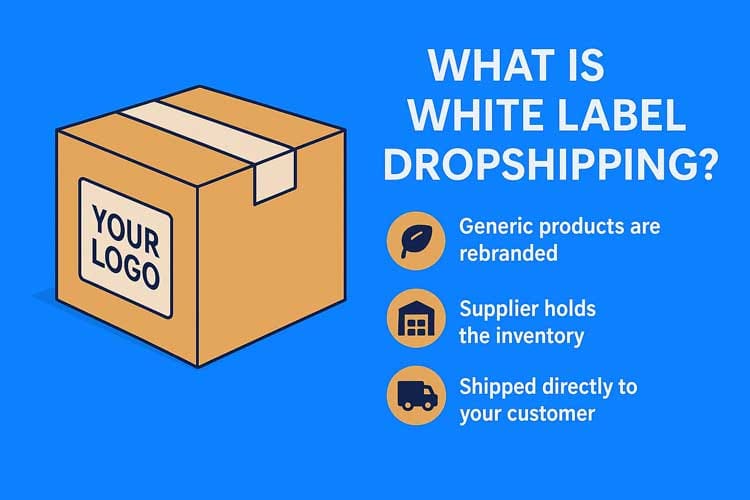
At its core, white label dropshipping is a business practice where a manufacturer produces a generic product (like a stainless steel water bottle or a Vitamin C serum) and allows you, the retailer, to rebrand it as your own.
Think of it like the grocery store. The “Great Value” or “Kirkland Signature” ibuprofen you buy is likely made in the same factory as Advil. The product is chemically identical (generic), but the branding makes it unique to the retailer (white label).
In the dropshipping context, the supplier holds the inventory. When you get an order, they print your logo on the package (or product), pack it, and ship it directly to your customer. You never touch the box.
White Label vs. Private Label vs. Standard Dropshipping
Confusion often arises between these three models. Here is the definitive breakdown:
| Feature | Standard Dropshipping | White Label Dropshipping | Private Label Dropshipping |
| Product Type | Generic, other brand’s logo. | Generic, Your logo/packaging. | Custom formulation/design. |
| Customization | None. | Low (Logo + Packaging). | High (Ingredients, Design, Features). |
| Startup Cost | Very Low ($0 – $100). | Low/Medium ($100 – $500). | High ($1,000+). |
| Time to Market | Immediate. | Fast (1-2 Weeks). | Slow (3-6 Months). |
| Competition | High (Price Wars). | Medium (Brand differentiation). | Low (Unique product). |
| Profit Margins | Low (15-20%). | Medium/High (30-50%). | Very High (50%+). |
Pro Tip: White labeling is the perfect “middle ground.” It offers the branding benefits of private labeling with the speed and low risk of standard dropshipping.
Recommended Blog for You:
👉 Wholesale vs Retail Price Formula for Profit Margins
👉 13 Best Home Decor Wholesale Suppliers in the USA
👉 What is Wholesale Pricing? Benefits, Strategies, and Examples for Success
👉 How to Sell Wholesale Clothing Online: A Step-By-Step Guide
👉 How to Make Packaging for Wholesale Products? : A Complete Guide
How to Start White Label Dropshipping in 7 Steps
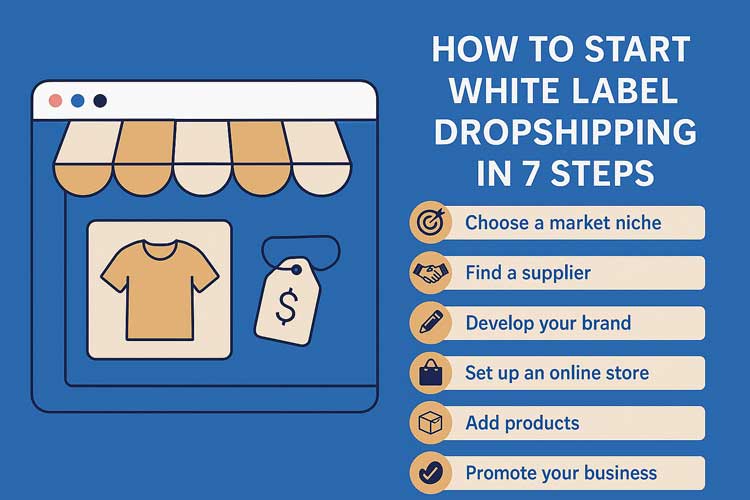
Ready to build an asset rather than just a cash flow stream? Follow this proven roadmap.
Step 1: Identify a “Brandable” Niche
Not every product works for white labeling. You need a niche where brand trust dictates the price. A generic USB cable is a commodity; people just want the cheapest one. However, skincare, supplements, pet accessories, and fitness gear are markets where people pay a premium for a brand they trust.
- Criteria for Success:
- High emotional investment (health, beauty, pets).
- Recurring purchase potential (supplements, cosmetics).
- Small and lightweight (low shipping costs).
Step 2: Find Reliable White Label Suppliers
This is the most critical step. You are marrying your brand’s reputation to their fulfillment capabilities.
- Supliful: Excellent for white-label supplements and vitamins (US-based).
- Spocket / HyperSKU: Great for connecting with US and EU suppliers who offer faster shipping and custom invoicing.
- Alibaba: The classic choice for bulk white labeling, though many suppliers now offer dropshipping with low MOQs (Minimum Order Quantities).
- Printful / Printify: The leaders in Print-on-Demand (a form of white labeling) for apparel and home goods.
Step 3: Order Samples and Verify Quality
Never skip this step. If a customer receives a low-quality product with your logo on it, your brand is dead on arrival.
- The “Unboxing” Test: When the sample arrives, assess the packaging. Is it crushed? Does the logo look like a cheap sticker or a professional print?
- The Usage Test: Use the product for a week. Does it do what it promises?
- The Shipping Test: How long did it really take to arrive? (Ignore what the website says; measure what actually happens).
Step 4: Create Your Brand Identity
You aren’t just selling a product; you are selling a “vibe.”
- Visuals: Use tools like Canva or hire a freelancer on Fiverr to create a professional logo and color palette.
- Packaging: Many white label suppliers allow you to customize the “thank you” card or the box insert. Use this real estate to offer a discount on their next order, driving lifetime value.
Step 5: Set Up Your E-commerce Store
Platforms like Shopify and WooCommerce are the gold standards here.
- App Integration: Install the app for your chosen supplier (e.g., the Supliful Shopify App). This automates order processing.
- Professionalism: Your site must look better than the generic dropshippers. High-quality images, an “About Us” page that tells a story, and a clear refund policy are non-negotiable.
Step 6: Determine Your Pricing Strategy
With White Label Dropshipping, you are not competing on price; you are competing on value.
- The Formula: (Product Cost + Shipping + Marketing Cost) x 2.5 = Retail Price
- If a white-label face cream costs you $12 shipped, do not sell it for $15. Sell it for $35-$40 by highlighting its premium ingredients and benefits.
Step 7: Launch and Market with Social Proof
Since your product is technically “generic,” your marketing must be specific.
- UGC (User Generated Content): Send your product to micro-influencers in exchange for a video review. Real people using your product build trust faster than any ad copy.
- Angle: Find a unique marketing angle. If you are selling white-label coffee, don’t just sell “coffee.” Sell “The High-Caffeine Roast for Night Shift Nurses.” Specificity sells.
Pros and Cons of White Label Dropshipping
To make an informed decision, you must weigh the benefits against the limitations.
The Pros:
- Higher Perceived Value: A branded product automatically commands a higher price tag than a generic one.
- Customer Retention: If customers love your brand, they come back to your store. In generic dropshipping, they just search for the item again and buy from whoever is cheapest.
- Asset Building: You are building a brand that can eventually be sold. Selling a generic dropshipping store is difficult; selling a brand with loyal customers is highly profitable.
The Cons:
- Limited Customization: You cannot change the formula of the serum or the shape of the bottle—only the label.
- Supplier Reliance: If your supplier runs out of stock or shuts down, your brand halts immediately.
- Competition: Other people may be selling the exact same formulation under a different label. Your marketing is your only differentiator.
Common Pitfalls & Advanced Strategies
The “Label Slap” Trap
A common pitfall is simply “slapping a label” on a bad product. White labeling is not a magic fix for poor quality. If the product is junk, your brand will be associated with junk. Quality is the foundation of brand equity.
Advanced Strategy: The “Hybrid” Model
Don’t feel stuck in one model. Many successful 7-figure stores start with White Label Dropshipping to validate the market. Once they are selling 500+ units a month, they transition to Private Labeling. They contact a manufacturer to create a custom formula or design, improving margins and creating a defensible moat around their business.
Whols- WooCommerce Wholesale Plugin
Manage your WooCommerce online store with more ease and efficiency with this feature-rich plugin.
Frequently Asked Questions
Q: Is white label dropshipping legal?
A: Yes, it is 100% legal. Manufacturers produce these goods specifically for retailers to rebrand. However, always ensure you are not infringing on another brand’s trademark (e.g., don’t put a Nike swoosh on a white-label sneaker).
Q: What is the difference between white label and private label?
A: White label is a pre-made product that you put your logo on. Private label is a custom product built from scratch to your specifications. White label is faster; private label is more unique.
Q: How much money do I need to start white label dropshipping?
A: You can start with $200 – $500. This covers your sample orders, domain name, Shopify/WooCommerce subscription, and initial logo design. You do not need thousands for inventory.
Q: Which products are best for white label dropshipping in 2025?
A: Consumables are king. Supplements, organic skincare, coffee, and pet treats are excellent because customers use them up and return to buy more.
Conclusion
White Label Dropshipping represents the evolution of e-commerce. It allows the solo entrepreneur to play in the same arena as big brands without the crushing weight of inventory costs.
By focusing on branding, customer experience, and quality curation, you aren’t just “dropshipping” you are building a business. The market data is clear: consumers want brands they can trust. The only question is, will that brand be yours?
Ready to start? Your first step is simple: Choose a niche, find a supplier like Supliful or Spocket, and order a sample today. Your brand begins the moment you hold that product in your hand.