


A wholesale partnership connects suppliers with buyers to facilitate bulk purchasing at reduced unit costs. For WooCommerce store owners, B2B sellers, and ecommerce businesses, these partnerships offer a strategic way to scale operations, access new markets, and strengthen competitive positioning.
Understanding how wholesale partnerships work and how to manage them effectively can transform your business from a single-channel operation into a diversified distribution network.
Quick Answer / TL;DR
A wholesale partnership is a business relationship where suppliers, manufacturers, or distributors collaborate with retailers or resellers to sell products in bulk at discounted prices. These partnerships help businesses reduce costs, expand market reach, and improve supply chain efficiency. Success depends on clear communication, aligned quality standards, and reliable fulfillment processes.
Table of Contents
What is a Wholesale Partnership?
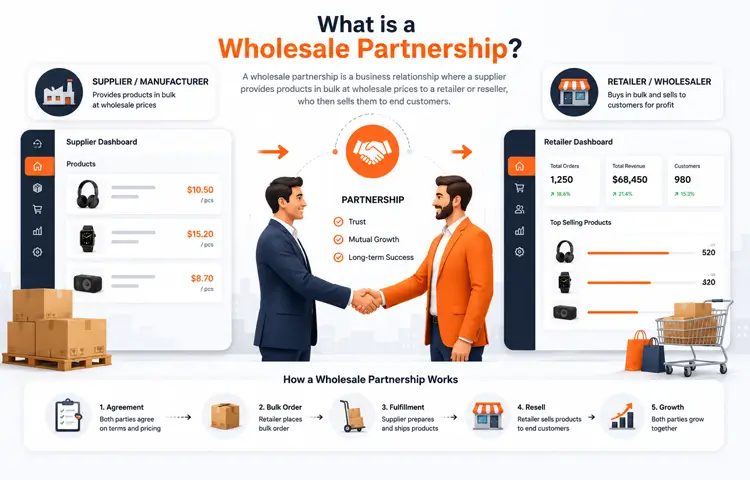
A wholesale partnership is a formal or informal business relationship between two or more entities in the supply chain, typically involving manufacturers, distributors, suppliers, and retailers. The supplier provides products in bulk at wholesale prices, while the buyer resells them to end customers or other businesses.
Unlike one-time transactions, wholesale partnerships are ongoing collaborations built on trust, communication, and mutual benefit. They often include negotiated payment terms, minimum order quantities (MOQs), tiered pricing structures, and shared marketing or distribution responsibilities.
These partnerships are common in B2B ecommerce, where businesses leverage WooCommerce or similar platforms to manage wholesale pricing, customer roles, and bulk order workflows.
Why Wholesale Partnerships Matter for Growing Businesses
Wholesale partnerships are essential for businesses looking to scale without shouldering the full burden of production, warehousing, or customer acquisition. They enable companies to focus on core competencies while leveraging partner resources for distribution and market expansion.
In 2026, the global B2B ecommerce market is projected to reach $36 trillion, making wholesale partnerships a critical component of omnichannel strategies. For WooCommerce store owners, establishing strong wholesale relationships can lead to higher order volumes, predictable revenue streams, and improved cash flow.
Wholesale partnerships also provide access to diverse product ranges, allowing businesses to adapt quickly to market trends and customer demands.
Key Benefits of a Wholesale Partnership
Cost Savings and Better Margins
Buying in bulk reduces per-unit costs, enabling businesses to maintain competitive pricing while protecting profit margins. Wholesalers leverage economies of scale to offer discounts that individual buyers cannot access.
Expanded Market Reach
Wholesale partnerships help businesses enter new geographic regions, distribution channels, and customer segments without significant upfront investment. Retailers gain access to established supplier networks, while suppliers benefit from increased visibility and sales volume.
Improved Cash Flow and Inventory Planning
Predictable wholesale orders help suppliers plan production schedules and manage inventory more efficiently. For buyers, negotiated payment terms (such as net 30 or net 60) improve cash flow management.
Operational Efficiency
Wholesale partnerships streamline procurement processes, reduce administrative overhead, and simplify logistics. By working with reliable partners, businesses can focus on growth rather than operational firefighting.
Access to Expertise and Resources
Strong wholesale partnerships often include knowledge sharing, joint marketing efforts, and collaborative product development. Suppliers may provide marketing assets, product training, or co-branding opportunities that benefit both parties.
Whols- WooCommerce Wholesale Plugin
Manage your WooCommerce online store with more ease and efficiency with this feature-rich plugin.
Recommended Blog for You:
How to Create a Wholesale Store in WooCommerce in Just a Few Easy Steps
How to Become a Wholesale Distributor: A Complete Guide
5 Tips For Finding the Best Small Business Wholesale Supplier
Common Challenges in Wholesale Partnerships
Minimum Order Requirements
Many suppliers require minimum order quantities that may strain smaller businesses with limited storage or capital. Negotiating flexible MOQs or starting with smaller test orders can help mitigate this challenge.
Pricing and Margin Pressure
Wholesale pricing impacts profit margins, and established suppliers may resist price negotiations. Buyers should compare multiple suppliers and demonstrate long-term commitment to secure better terms.
Quality Control Issues
Maintaining consistent quality standards is critical, as poor-quality products damage brand reputation and customer trust. Clear quality agreements, product samples, and regular audits help ensure alignment.
Communication and Coordination
Effective wholesale partnerships require open communication about inventory levels, demand forecasts, and market changes. Time zone differences, language barriers, or unclear expectations can create friction.
Payment Terms and Cash Flow Risk
Suppliers may require upfront payment or deposits, creating cash flow challenges for buyers. Establishing credit terms or using escrow services can reduce financial risk.
Supply Chain Disruptions
Global supply chain instability, including geopolitical issues, raw material shortages, and shipping delays, continues to challenge wholesale distributors in 2026. Diversifying supplier bases and maintaining safety stock can improve resilience.
How to Find the Right Wholesale Partner
Research and Vet Potential Partners
Conduct thorough research using online directories, trade shows, industry associations, and business referrals. Review supplier websites, customer testimonials, certifications, and industry experience before initiating contact.
Request Samples and Test Quality
Always request product samples to evaluate quality, packaging, and alignment with your brand standards. Testing products before committing to large orders reduces risk and ensures customer satisfaction.
Compare Pricing, Terms, and Minimums
Compare multiple suppliers on pricing, payment terms, shipping options, lead times, and minimum order requirements. Understanding market pricing helps you negotiate confidently.
Evaluate Communication and Responsiveness
A reliable wholesale partner responds promptly, communicates clearly, and demonstrates transparency about capabilities and limitations. Strong communication is the foundation of long-term partnership success.
Verify Credentials and Compliance
Ensure potential partners have the necessary certifications, licenses, registrations, and insurance. Compliance with industry regulations protects your business from legal and reputational risks.
Start Small and Scale Gradually
Begin with smaller orders or trial periods to test reliability, product quality, and fulfillment performance before scaling up. This approach reduces financial exposure while building trust.
Wholesale Partnership Checklist
Use this checklist to evaluate potential wholesale partners:
- Product Quality: Does the supplier consistently deliver high-quality products that meet your standards?
- Pricing Competitiveness: Are wholesale prices competitive and sustainable for your margin targets?
- Minimum Order Quantities: Can you meet or negotiate acceptable MOQs?
- Payment Terms: Are payment terms (net 30, net 60, or upfront deposit) manageable for your cash flow?
- Lead Times: Can the supplier meet your delivery timeline requirements?
- Communication: Is the supplier responsive, transparent, and professional in communication?
- Certifications and Compliance: Does the supplier have the necessary licenses, certifications, and insurance?
- References and Reviews: Do other businesses provide positive feedback about this supplier?
- Scalability: Can the supplier grow with your business as order volumes increase?
- Returns and Guarantees: Are there clear policies for defects, returns, and order errors?
How WooCommerce Store Owners Can Manage Wholesale Partnerships
Managing wholesale partnerships in WooCommerce requires specialized tools to handle role-based pricing, minimum order quantities, bulk discounts, and customer account management.
Set Up Role-Based Wholesale Pricing
WooCommerce allows store owners to create custom user roles (such as “Wholesale Customer”) and assign specific pricing to those roles. This ensures wholesale partners see discounted prices while retail customers see standard pricing.
Configure Minimum Order Quantities
Setting minimum order quantities for wholesale customers ensures orders meet profitability thresholds. WooCommerce wholesale plugins enable MOQ settings at the product, category, or customer role level.
Enable Tiered Pricing for Bulk Orders
Tiered pricing structures reward larger orders with deeper discounts, encouraging wholesale partners to increase order volumes. This pricing model benefits both supplier and buyer by improving economies of scale.
Restrict Guest Access and Require Registration
Wholesale stores often hide pricing from guest users and require account approval before granting access. This protects pricing confidentiality and ensures only qualified buyers receive wholesale terms.
Automate Payment Terms and Invoicing
WooCommerce integrations with accounting and invoicing tools streamline payment term management (net 30, net 60) and reduce manual administrative work. Automated invoicing improves cash flow tracking and reduces errors.
Use Wholesale Management Plugins
Tools like Whols—a WooCommerce B2B wholesale pricing plugin, simplify wholesale partnership management by offering role-based pricing, bulk discounts, customer registration workflows, and tiered pricing structures. These plugins reduce setup complexity and improve operational efficiency for WooCommerce store owners managing multiple wholesale partners.
Example: How a WooCommerce Store Can Use Wholesale Partnerships
Imagine a WooCommerce store selling eco-friendly kitchenware. The store owner partners with a wholesale supplier of bamboo utensils to expand product offerings without manufacturing costs.
- Step 1: The store owner researches suppliers, requests samples, and negotiates a wholesale price of $3 per unit (retail price $8) with a minimum order quantity of 100 units.
- Step 2: Using Whols or a similar plugin, the owner creates a “Wholesale Customer” role and sets the bamboo utensil wholesale price at $3, visible only to approved wholesale accounts.
- Step 3: The store owner configures tiered pricing: 100–500 units at $3 each, 501–1,000 units at $2.75 each, and 1,001+ units at $2.50 each.
- Step 4: Wholesale partners register on the site, and the store owner approves accounts manually to maintain control over pricing access.
- Step 5: The store owner tracks wholesale orders through WooCommerce, communicates regularly with the supplier about inventory needs, and adjusts pricing or MOQs based on demand trends.
This workflow demonstrates how WooCommerce stores can efficiently manage wholesale partnerships while maintaining profitability and customer satisfaction.
When Should You Start a Wholesale Partnership?
Consider starting a wholesale partnership when:
- You need to scale product offerings without manufacturing or warehousing costs
- Your business has a predictable demand and can commit to minimum order quantities
- You want to enter new markets or distribution channels without a heavy upfront investment
- You seek to improve cash flow through negotiated payment terms and bulk purchasing
- You have the infrastructure (such as a WooCommerce store with wholesale pricing tools) to manage B2B relationships efficiently
Wholesale partnerships work best when both parties share aligned goals, maintain open communication, and commit to long-term collaboration.
Frequently Asked Questions
What are the main benefits of a wholesale partnership?
The key benefits of a wholesale partnership include cost savings through bulk purchasing, expanded market reach, improved cash flow, operational efficiency, and access to partner expertise and resources.
What challenges should I expect in a wholesale partnership?
Common challenges include minimum order requirements, pricing and margin pressure, quality control issues, communication barriers, payment terms, and supply chain disruptions.
How do I find a reliable wholesale partner?
Research potential partners through online directories, trade shows, and referrals. Vet suppliers by requesting samples, comparing pricing and terms, verifying credentials, and starting with small test orders.
Can I manage wholesale partnerships in WooCommerce?
Yes, WooCommerce supports wholesale partnerships through role-based pricing, minimum order quantities, tiered pricing, and customer account management. Plugins like Whols simplify wholesale pricing and B2B workflows for WooCommerce store owners.
How do I negotiate better wholesale pricing?
Compare prices from multiple suppliers, commit to larger order volumes, establish long-term relationships, and demonstrate reliable payment history. Researching market pricing strengthens your negotiation position.
What is the difference between a wholesale partner and a supplier?
A wholesale partner implies an ongoing, collaborative relationship with shared goals and mutual benefit. A supplier may provide one-time transactions without a deeper partnership commitment.
Final Thoughts
Wholesale partnerships offer powerful opportunities for WooCommerce store owners, B2B sellers, and ecommerce businesses to scale efficiently, reduce costs, and expand market reach. Success depends on choosing the right partners, maintaining clear communication, and using the right tools to manage pricing, orders, and customer relationships.
For WooCommerce stores, plugins like Whols simplify wholesale partnership management by automating role-based pricing, bulk discounts, minimum order quantities, and customer registration workflows. By combining strong partnerships with efficient technology, businesses can thrive in the competitive B2B ecommerce landscape of 2026.
Whether you’re just starting or optimizing existing wholesale relationships, focus on trust, transparency, and mutual value creation to build partnerships that support long-term growth.